Bestillingsportalen har hatt tekniske problemer – dette er nå løst. Ta gjerne kontakt med oss på post@tolkenett.no hvis du har spørsmål.

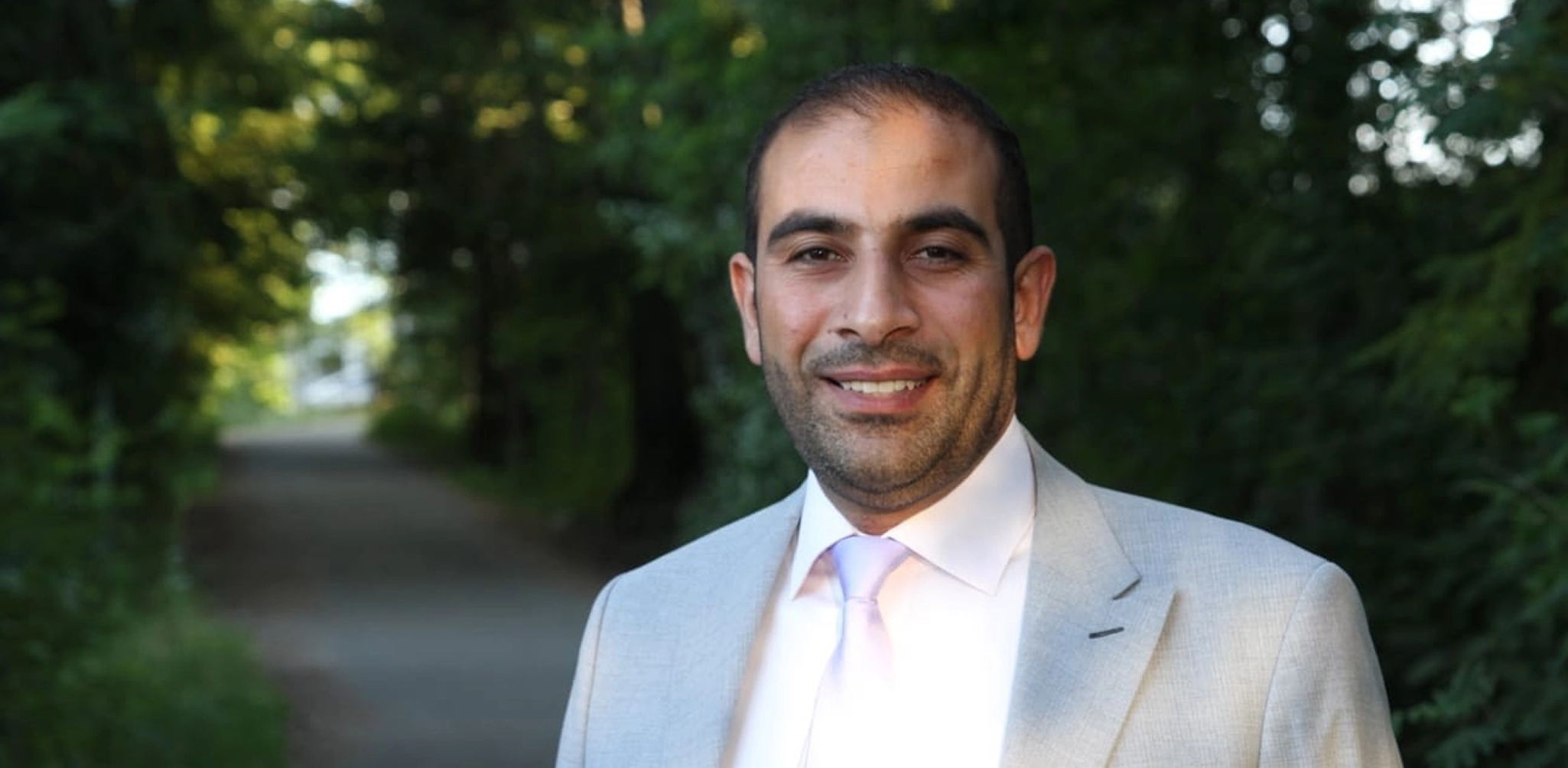
Nader has worked as an interpreter between Arabic and Norwegian since 2018. With a background as a pharmacist and professional experience in healthcare, he knows how decisive good communication can be—particularly when it comes to health, safety, and trust. Recently, he completed the Bilingual Test to further develop in his role as an interpreter. In this interview, he shares openly and thoughtfully how he prepared, what he learned, and why the test has been so important for both his professional growth and confidence at work.
I have worked as an interpreter since 2018, and I am also a trained pharmacist. Through my work in healthcare, I have always had a strong desire to help people, and I know how crucial good communication can be — especially concerning health. That is why I wanted to become an interpreter as well: to be a link between people who do not understand each other. As an interpreter, I am very conscious of acting impartially and professionally, without giving personal advice or influencing the conversation. This ensures that all parties feel secure.
I wanted to take the Bilingual Test to strengthen my professionalism and to obtain formal confirmation that I have the necessary skills to interpret at a high level. Many clients and institutions depend on the interpreter being qualified and impartial, and the test provides clear evidence of this. After passing, I also gained access to the TAO course, which is extremely useful. It gives interpreters important tools and guidelines for carrying out our work in an even more professional and safe way.
Personally, I wanted to become more confident in my role and ensure that I deliver quality in every assignment. I also wanted official documentation confirming that I can interpret accurately and without altering the message. In addition, I knew that the TAO course following the test would give me valuable knowledge. The course offers practical advice, concrete examples, and important guidelines that have made me even more professional in my work.
I practiced terminology extensively, especially within healthcare and pharmacy, and trained to translate complex sentences quickly and precisely. I also practiced remaining impartial, even in emotionally charged situations. In addition, I drew on my healthcare experience to understand how conversations often unfold and how to render them in full without losing detail or influencing meaning.
Yes, I was surprised by how many aspects of the interpreter’s role were tested. It was not only about language, but also about professionalism, memory, concentration, and the ability to manage pressured situations safely. I later saw how the TAO course builds on this, providing clear guidelines for acting professionally as an interpreter.
The most challenging aspect was maintaining complete focus and conveying everything without losing content. The most rewarding was realizing that I could succeed in this and contribute to people understanding important matters in their lives. The TAO course has also given me many examples and tools that have strengthened me in such situations.
The test has been very important. It has given me greater confidence in my work, and I feel more secure when interpreting even the most difficult conversations. In addition, the TAO course offers a wealth of useful information and guidance on ethics, techniques, and how to manage challenging situations. This has made me more structured and more aware of my role as a mediator.
Yes, definitely. I am far more conscious about acting impartially and not influencing the conversation in any way. I also use terminology more precisely and prepare more thoroughly. The TAO course has provided me with techniques and tools that allow me to interpret with higher quality and professionalism.
My advice is to practice extensively—not only in language, but also in professionalism and impartiality in all situations. Study subject-specific terminology and practice interpreting under time pressure. And remember that after passing the test, you gain access to the TAO course, which is a very valuable resource. It provides numerous tips and guidance that can be applied directly in interpreting practice.
Yes, I'm definitely considering it. I want to continue to develop and build on what I have learned through the test and the TAO course. An interpretation education will give me even more knowledge and make me better equipped to handle demanding situations in a professional manner.
Do you want to take the test? The application deadline for autumn 2025 is 18 August. Applications are submitted through OsloMet’s website.
11.08.2025
Do you have questions or need more information? Feel free to send us a message via the form.
If you need an interpreter, please place your order in the portal if you have a user account, or contact us at post@tolkenett.no.